

Kawasaki’s
Hydrogen Technologies
-
We are working on technology development
-
for the construction of a hydrogen supply chain,
-
leveraging our many years of knowledge and experience
-
in all areas of production, transportation, storage, and utilization of hydrogen.
-
Here we introduce some of the technologies
-
that Kawasaki has developed, or is in the process of developing.
We are working on technology development for the construction of a hydrogen supply chain, leveraging our many years of knowledge and experience in all areas of production, transportation, storage, and utilization of hydrogen.
Here we introduce some of the technologies that Kawasaki has developed, or is in the process of developing.
-
Production
-
Transportation & Storage
-
Utilization
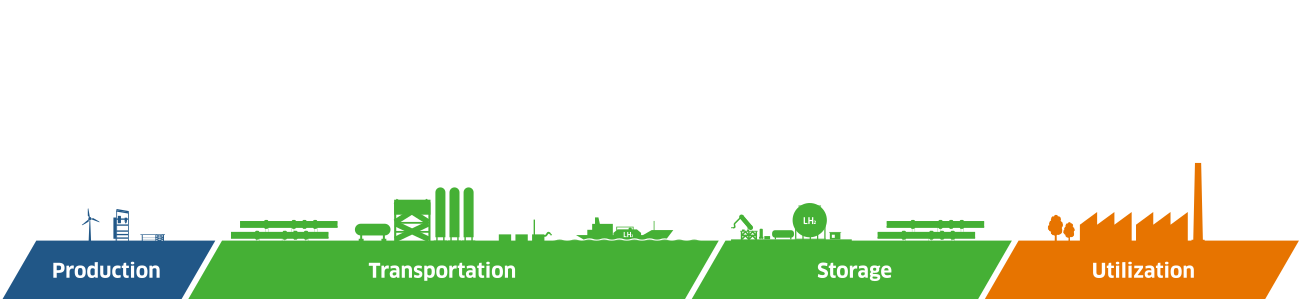
Production
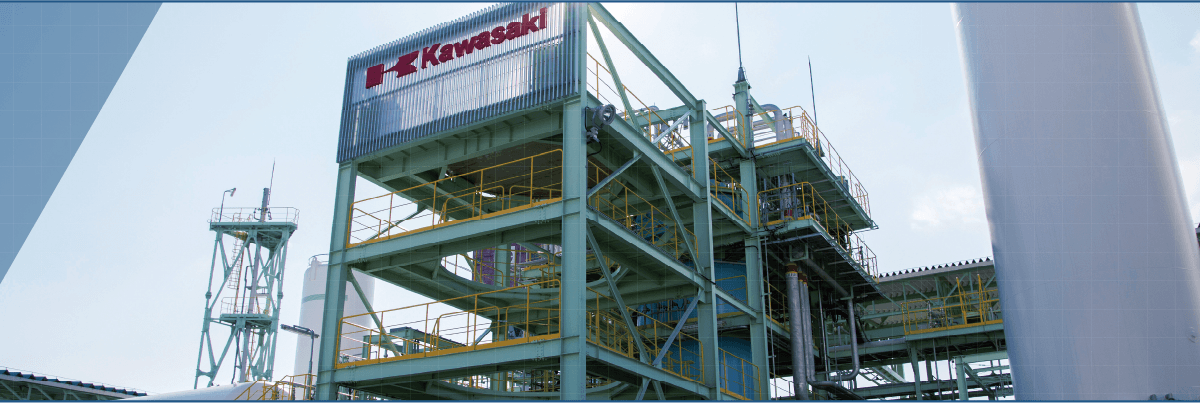
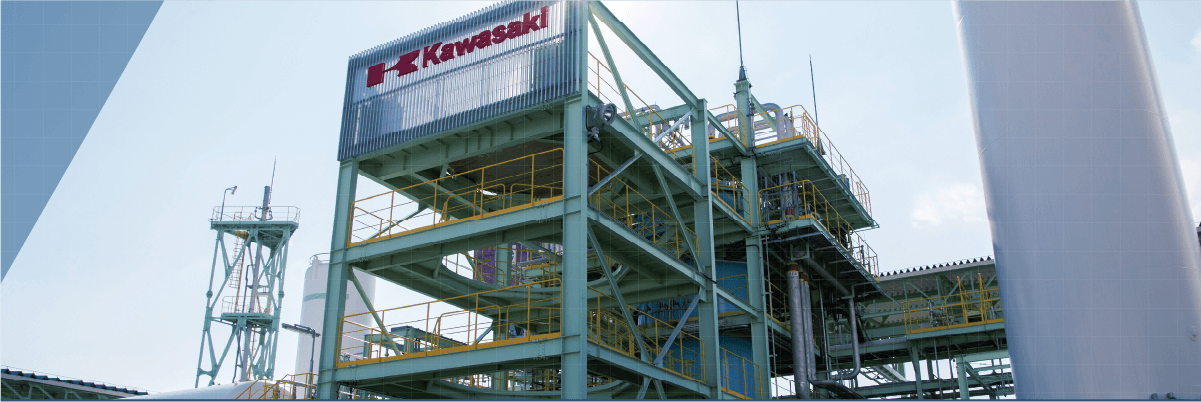
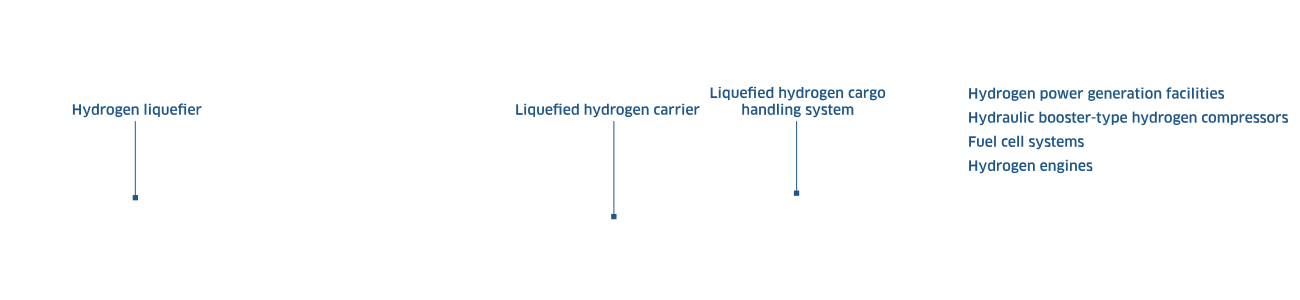
Hydrogen liquefier
Converting hydrogen from gas to liquid
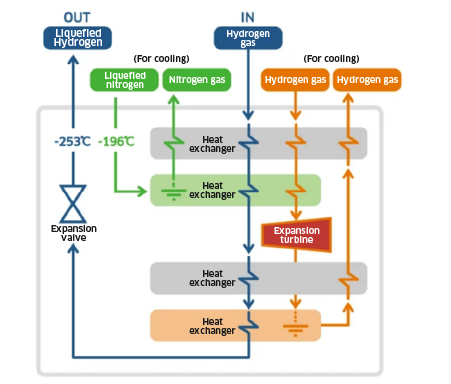
As a result of exchanging heat with liquefied nitrogen and cold energy generated by an expansion turbine, the hydrogen gas cooled to -253℃ and liquefied.
Hydrogen liquefier
Converting hydrogen from gas to liquid
As a result of exchanging heat with liquefied nitrogen and cold energy generated by an expansion turbine, the hydrogen gas cooled to -253℃ and liquefied.
Converting hydrogen from gas to liquid
When cooled, liquefied hydrogen shrinks to 1/800th of its volume in the
gaseous state,
enabling mass transportation and storage of hydrogen.
Hydrogen is liquefied using a method known as the “Claude cycle.” The hydrogen
gas compressed by the hydrogen compressor is first precooled to nearly −200 °C
using liquid nitrogen. It is then further cooled by several dozen degrees using
the cold energy of a refrigeration cycle, and finally liquefied by adiabatic
expansion via an expansion valve.
This method makes full use of Kawasaki’s comprehensive capabilities, including
process design technologies cultivated through its work on gas turbines,
compressors, high‑speed rotating machinery, control systems, and high‑precision
machining.
Kawasaki was among the first companies to explore the potential of cryogenic
technologies for
hydrogen liquefaction, and began selling Japan’s first “hydrogen liquefaction
system” for industrial use in 2020.
LEARN MORE
Transportation & Storage
Liquefied hydrogen carrier
Maintaining hydrogen liquefied during transport
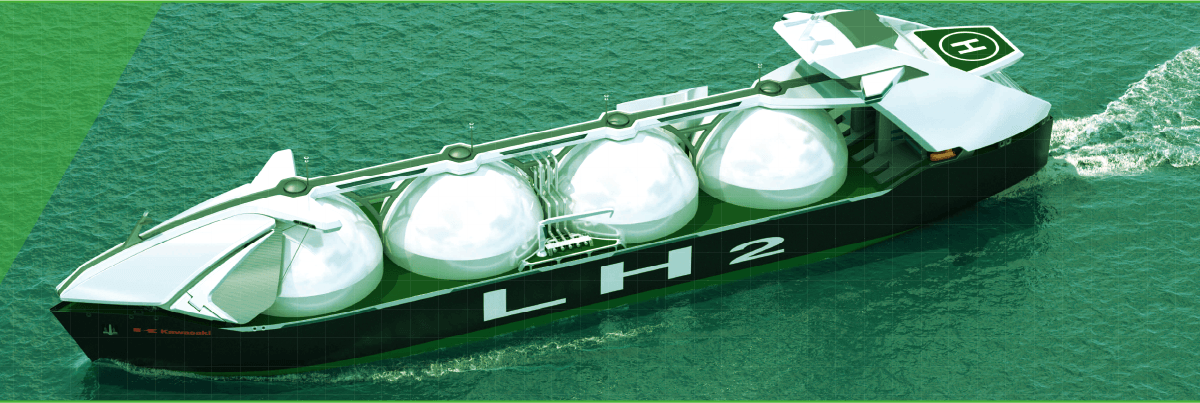
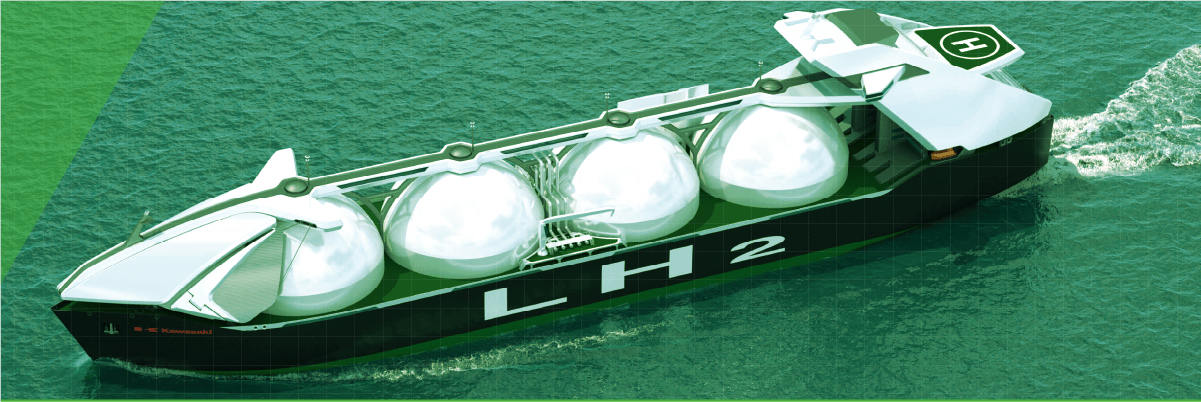
During transport, liquefied hydrogen is stored in double-walled vacuum-insulated tanks that maintain its cryogenic temperature, eliminating the need for active refrigeration.
Liquefied hydrogen carrier
Maintaining hydrogen liquefied during transport
During transport, liquefied hydrogen is stored in double-walled vacuum-insulated tanks that maintain its cryogenic temperature, eliminating the need for active refrigeration.
Insulation technology for liquefied hydrogen transport
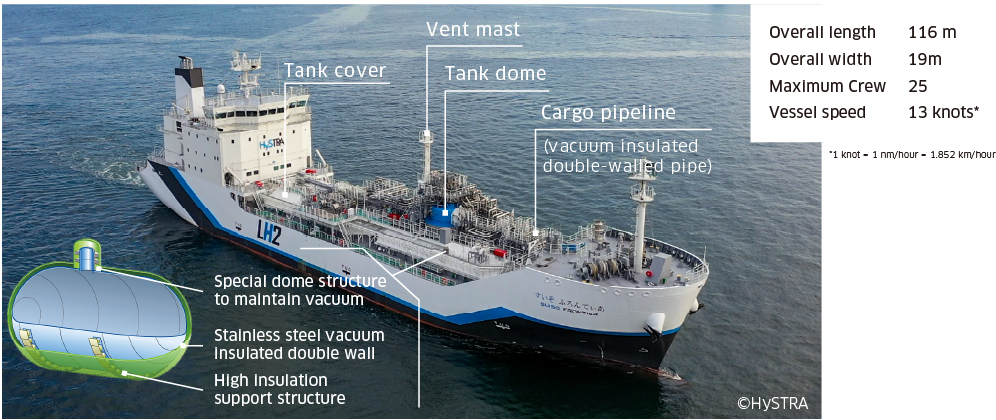
In order to keep hydrogen in a liquid state, it is necessary to minimize heat ingress from outside the tank and prevent the liquefied hydrogen from evaporating. To achieve this, the tank has a double-wall structure with a vacuum between the inner and outer walls for enhanced insulation. This structure allows the liquefied hydrogen to remain in its liquid state without the need for continuous refrigeration, making it possible to transport it over long distances from production sites to end-use locations around the world.
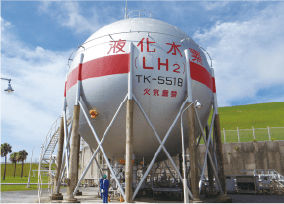
to JAXA approximately 40 yeas ago.
Liquefied hydrogen has long been used in Japan as rocket fuel and Kawasaki has delivered three spherical tanks with a capacity of 600㎥ each to JAXA’s Tanegashima Space Center, where they are still in operation.
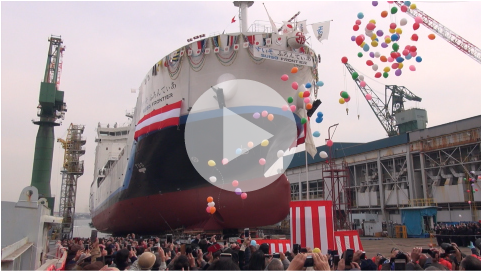
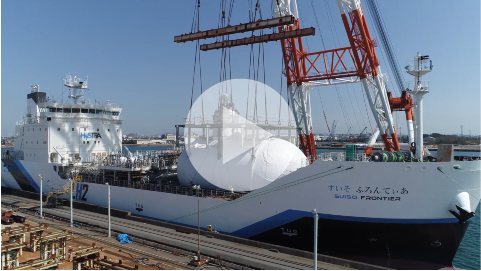
Collaboration partner

TOPIC
Building a global shipping network for hydrogen
Kawasaki Heavy Industries' advertisement feature, Building a global shipping network for hydrogen, has been published as part of the Nature Index: Energy special feature on the website of Nature, a leading multidisciplinary science journal.
Advertisement feature:
https://www.nature.com/articles/d42473-025-00001-4
Nature Index:
https://www.nature.com/collections/bcgfijbjcd
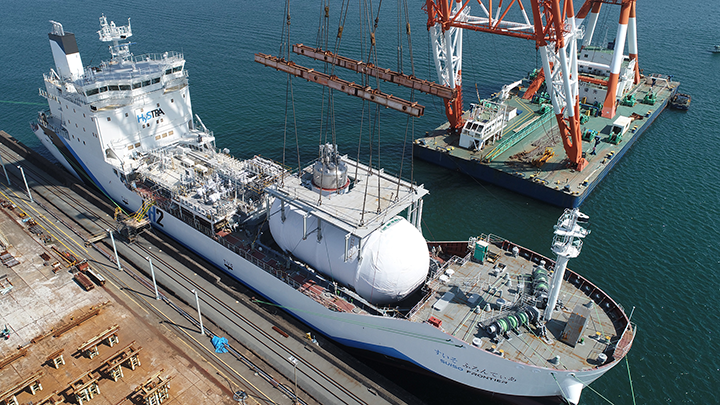
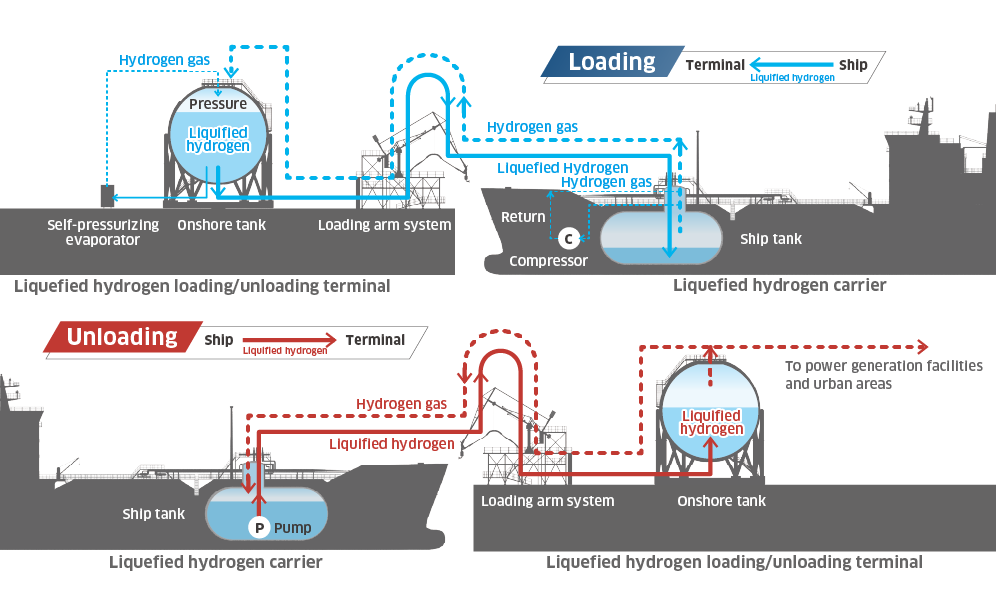
Liquefied hydrogen cargo handling system
Unloading liquefied hydrogen without leakage
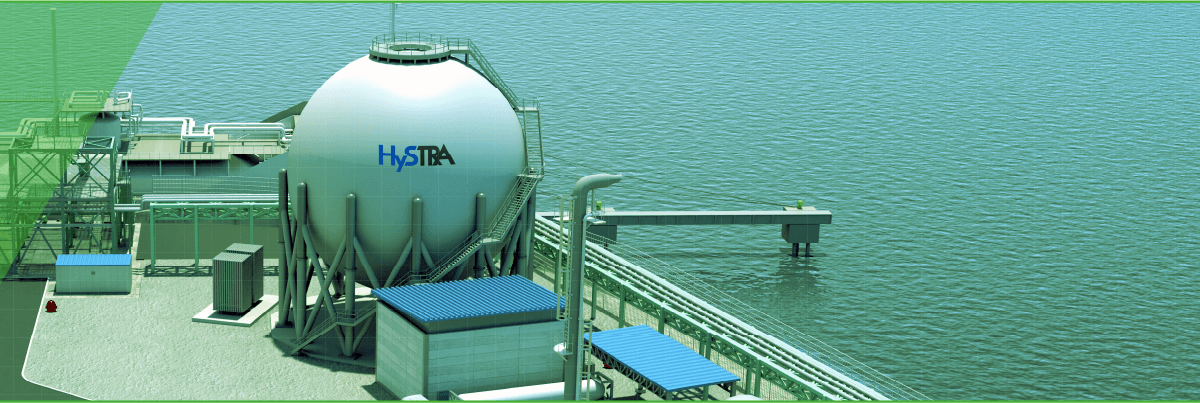
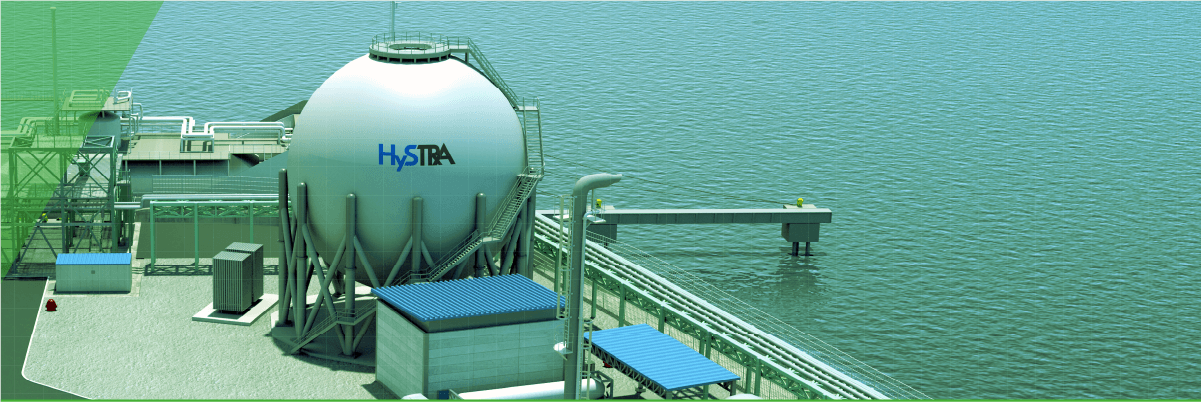
To prevent boil-off of liquefied hydrogen during unloading, the unloading equipment also features a double-wall structure.
Liquefied hydrogen cargo handling system
Unloading liquefied hydrogen without leakage
To prevent boil-off of liquefied hydrogen during unloading, the unloading equipment also features a double-wall structure.
Insulated Joints for maintaining liquefied hydrogen
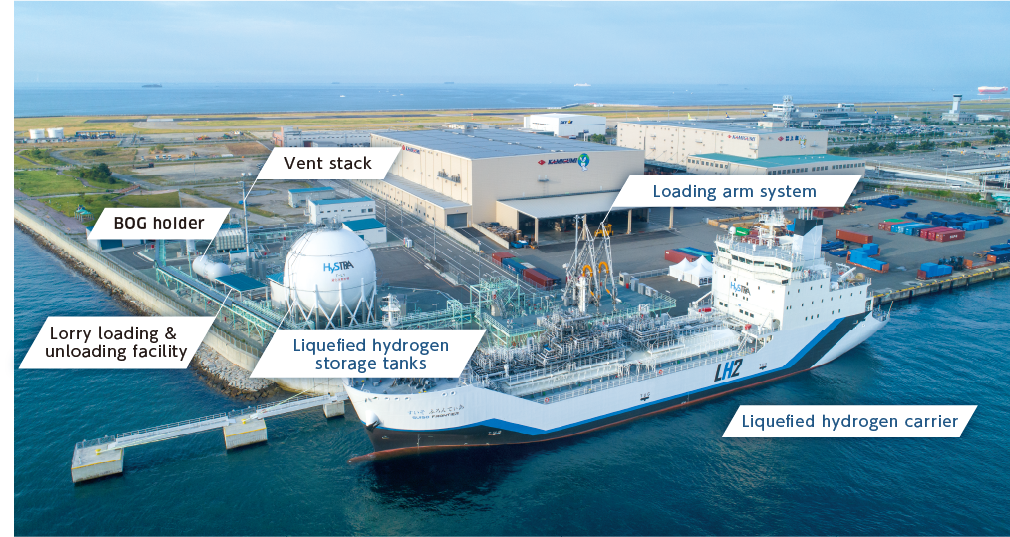
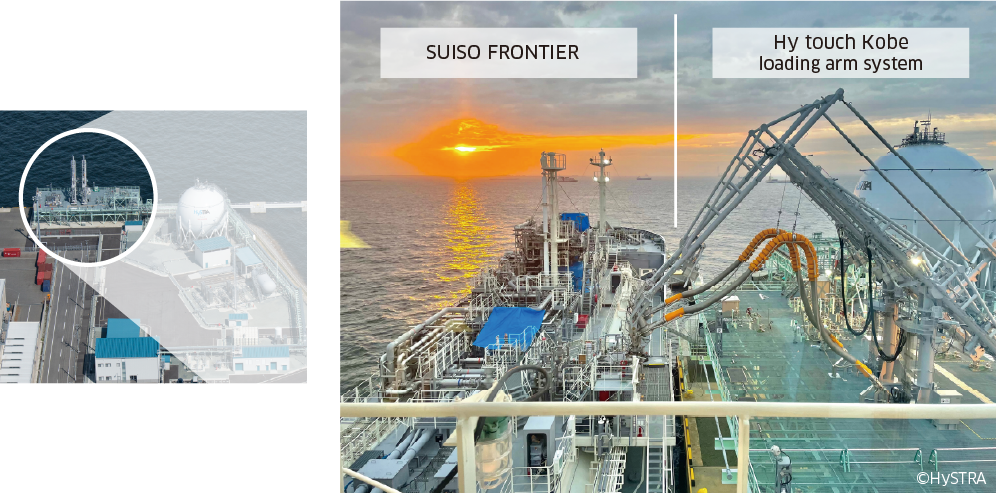
Liquefied hydrogen terminals are equipped with
a loading arm system to load and unload
liquefied hydrogen between ship and shore.
Inside the ship’s tank, a pump designed for handling liquefied hydrogen at -253℃
is installed.
This pump ensures efficient transfer
operations while maintaining pressure balance between the ship’s tank and the
onshore storage tank.
Hy touch Kobe
Collaboration partner
Utilization
Hydrogen power generation facilities
Using existing facilities for hydrogen power generation
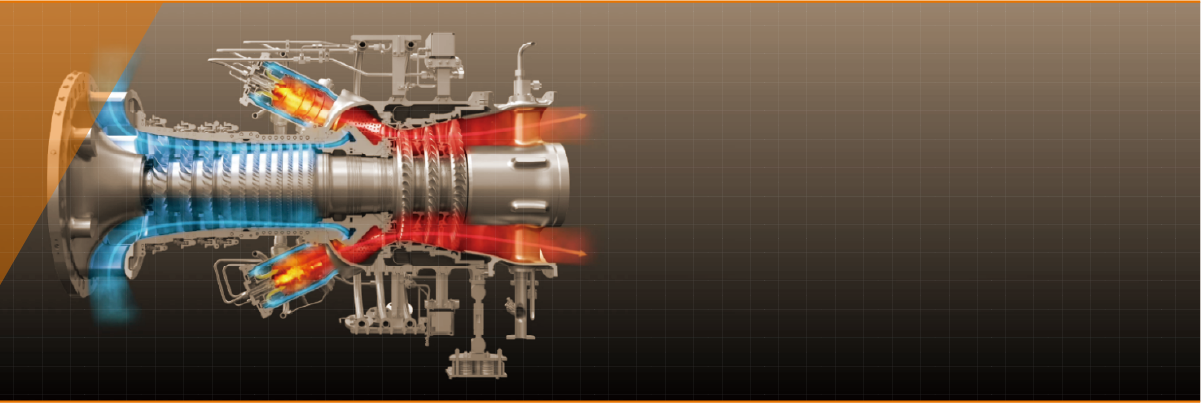
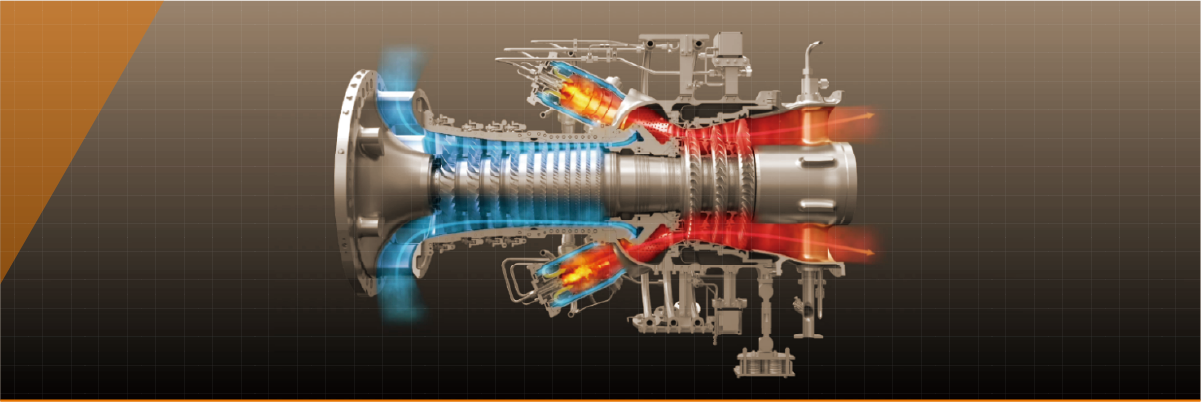
Hydrogen power generation can be achieved by retrofitting or replacing conventional gas turbines and gas engines to operate on 100% hydrogen. Alternatively, co-firing with hydrogen is also possible, allowing existing facilities to gradually transition toward cleaner energy solutions.
Hydrogen power generation facilities
Using existing facilities for hydrogen power generation
Hydrogen power generation can be achieved by retrofitting or replacing conventional gas turbines and gas engines to operate on 100% hydrogen. Alternatively, co-firing with hydrogen is also possible, allowing existing facilities to gradually transition toward cleaner energy solutions.
Hydrogen Power Generation Using Existing Gas Turbines
Kawasaki has been developing gas turbine technologies for both hydrogen
co-firing and 100% hydrogen combustion. Hydrogen combustion, which features a
higher flame speed and temperature than natural gas, presents challenges such as
increased NOx emissions and elevated temperatures in combustor components.
Through proprietary combustor development, Kawasaki has overcome these
challenges has successfully implemented both co-firing and 100% hydrogen power
generation using existing gas turbines.
Furthermore, Kawasaki's hydrogen gas turbines can be applied in cogeneration
systems (CGSs/ CHP: combined power and heat) , producing both electricity and
heat (such as steam) for efficient energy utilization. We offer a wide lineup of
turbines for both co-firing and 100% hydrogen applications.
Micromix burner receives “Chairperson’s Award” at the 2024 Cogeneration Awards
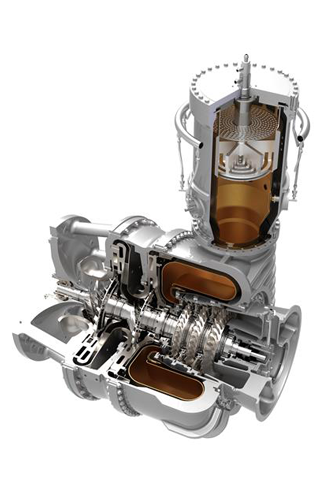
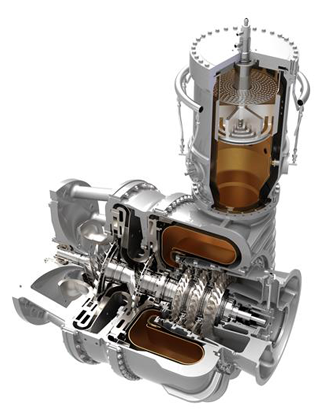
installed with Micromix (Dry Low NOx) combustor
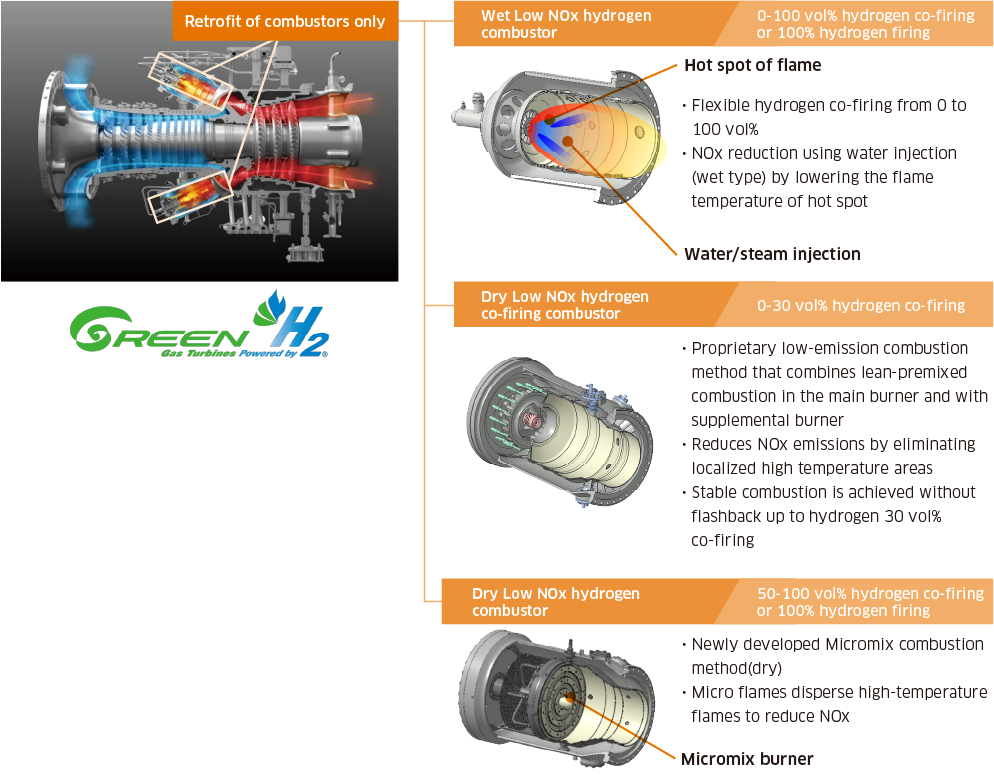
This product enables flexible operation on 100% hydrogen or through co-firing at hydrogen volume ratios ranging from 50% to 100%.

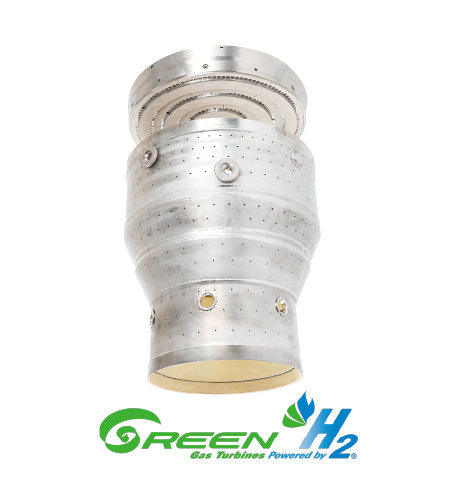
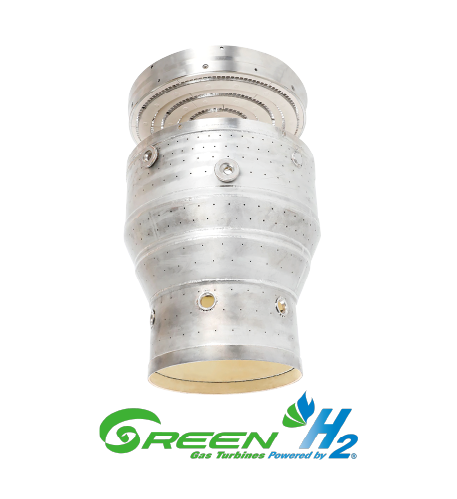
Through the development of Kawasaki’s proprietary dry low-NOx combustion technology called “Micromix,” we have successfully suppressed emissions of NOx, a regulated environmental pollutant, and realized a gas turbine capable of stable hydrogen combustion with low NOx emissions.

Kawasaki’s Micromix combustor was developed and commercialized with support
from NEDO
under the following demonstration projects:
“Development and Demonstration of Dry Low-NOx Hydrogen Combustion Gas
Turbine Technology” (FY2019-FY2020)
“Technology Development and Research for Establishing Regional Models of
Hydrogen CGS” (FY2021-FY2022)

Global Deployment of Kawasaki's hydrogen gas turbines
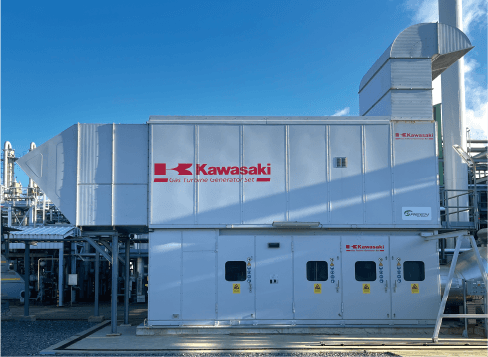
was delivered to Chevron Phillips Chemical International N.V. in Belgium.
Green gas engines installed with hydrogen co-firing technology
Kawasaki is the first Japanese gas engine manufacturer to have developed
combustion technology that enables stable operation of large gas engines with 5
MW and above through mixed combustion using natural gas and up to 30% hydrogen.
In addition, for the first time in the world a 7.5 MW gas engine was
successfully
operated using a mixed fuel of up to 30% hydrogen and city gas.
Just like gas turbines, gas engines also face challenges such as abnormal
combustion and excessive temperatures in combustion chamber components. To
address these challenges, Kawasaki has developed a control system-leveraging its
co-firing technology-that optimizes combustion conditions based on power output
and hydrogen-to-natural gas ratio. Furthermore, Kawasaki has demonstrated stable
operation of a single-cylinder test engine equipped with this system, even under
hydrogen mixed-combustion conditions.
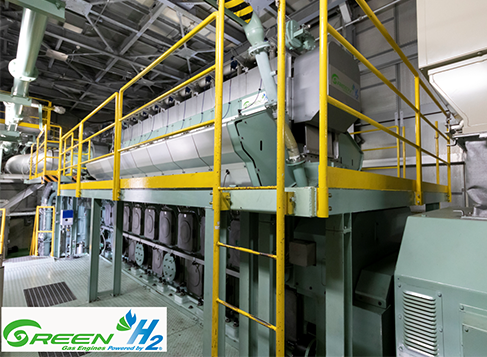
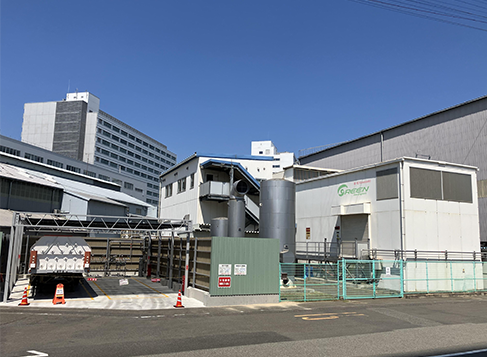
When implemented at customer facilities, hydrogen co-firing can be achieved with minimal modifications, such as adding a hydrogen supply system to a conventional gas engine. At a 30% hydrogen co-firing, it is possible to reduce CO2 emissions by approximately 1,000 tons per year.
Related Technology
LEARN MORE
Hydraulic Booster-type Hydrogen Compressor
Efficiently refuelling hydrogen for fuel cell vehicles(FCVs)
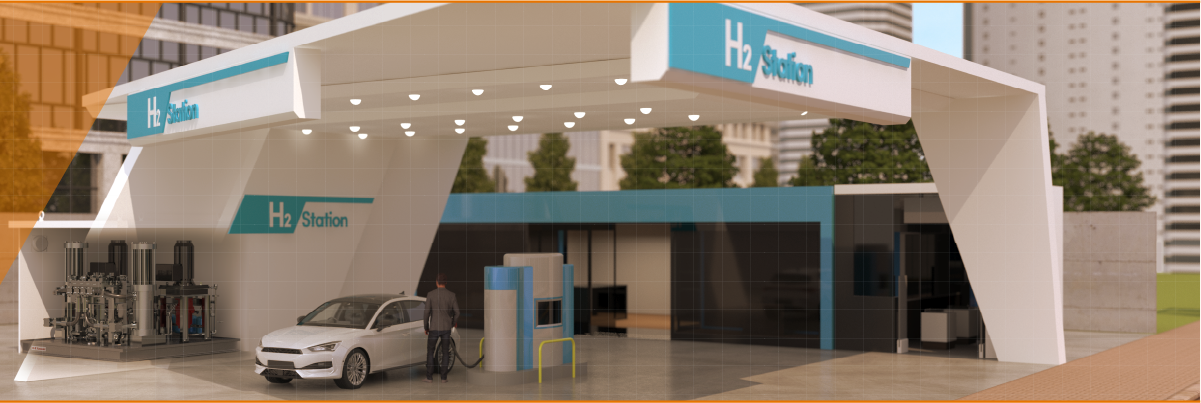
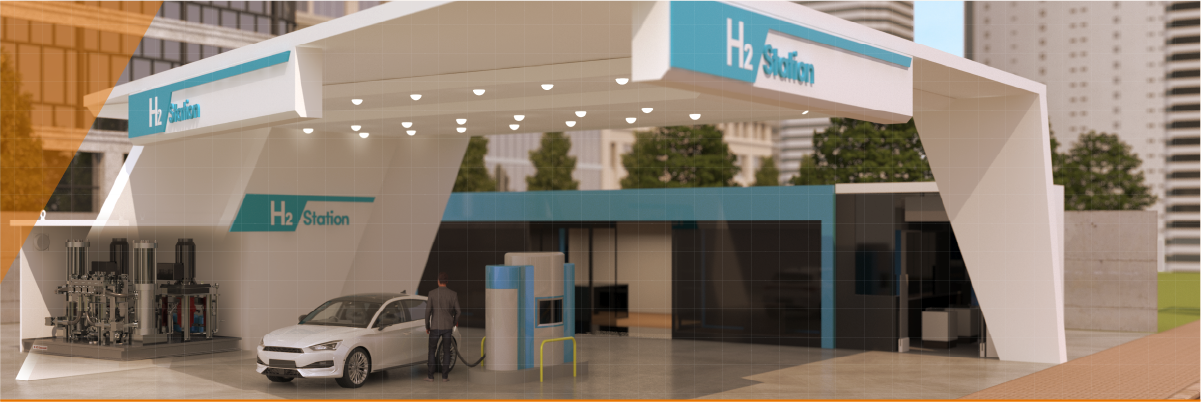
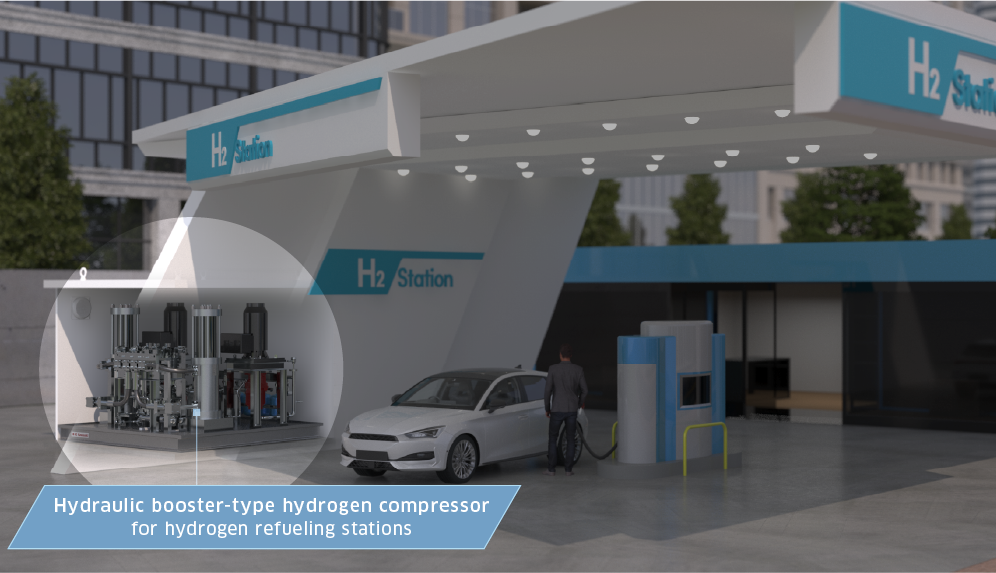
Contributing to the spread of FCVs by improving the efficiency of hydrogen compressors—the core technology of hydrogen refueling stations(HRSs).
Hydraulic Booster-type Hydrogen Compressor
Efficiently refuelling hydrogen for fuel cell vehicles(FCVs)
Contributing to the spread of FCVs by improving the efficiency of hydrogen compressors—the core technology of hydrogen refueling stations(HRSs).
Efficiently refuelling hydrogen for fuel cell vehicles(FCVs)
Hydraulic booster-type hydrogen compressors play a key role at HRSs by compressing hydrogen gas for fuelling FCVs. The hydrogen gas booster unit is driven by Kawasaki’s advanced speed-controlled hydraulic system.
Characteristics
- Adopting a hydraulic pump with rotation speed control system for significant energy savings.
- Hydraulic cylinder fitted with a position sensor precisely controls the positioning of the gas piston.
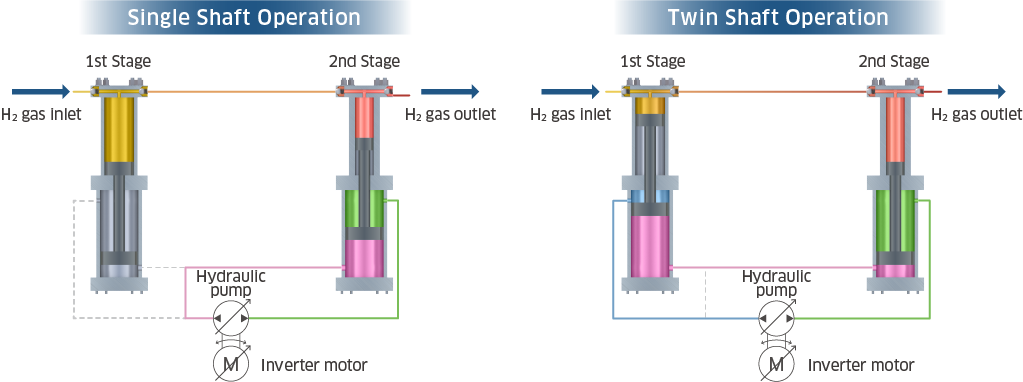
- Dual-shaft independent booster enables optimal operation patterns depending on the inlet pressure.
- Vertical booster design allows top-side access, which leads to high maintainability and space saving around the compressor.
- Oil tank is sealed to reduce oil volume and prevent oil deterioration.
Operation Mode


Fuel Cell System
Enabling easy installation of fuel cells in various applications
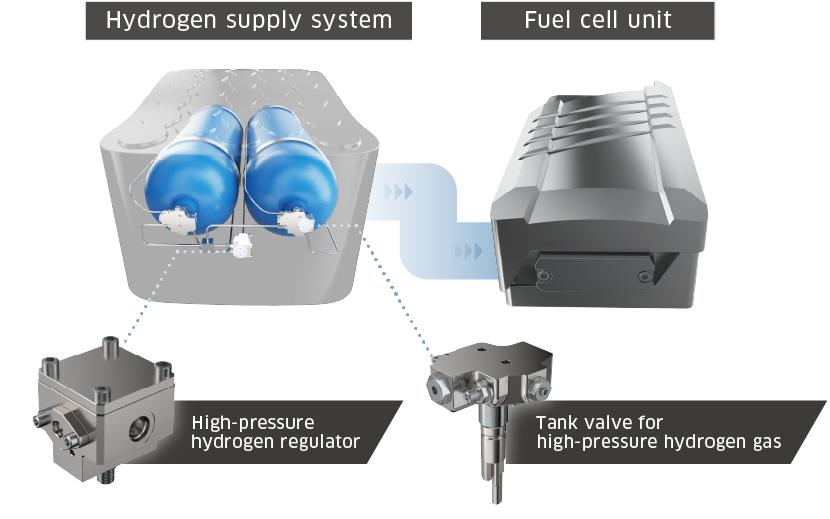
Providing a packaged fuel cell system that includes a hydrogen supply system, such as high-pressure hydrogen tanks, with Kawasaki’s high-pressure hydrogen gas valves as the key component.
Fuel Cell System
Enabling easy installation of fuel cells in various applications
Providing a packaged fuel cell system that includes a hydrogen supply system, such as high-pressure hydrogen tanks, with Kawasaki’s high-pressure hydrogen gas valves as the key component.
Enabling easy installation of fuel cells in various applications
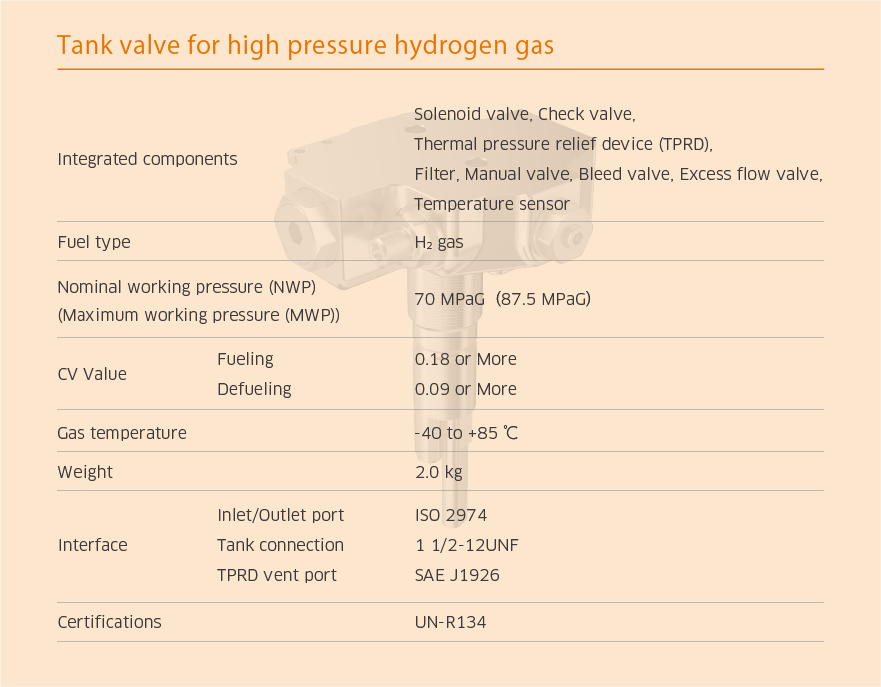
Kawasaki’s high-pressure hydrogen gas valves have high reliability, meeting all durability requirements for automotive use. We are currently developing a fuel cell system that can be easily installed in construction machinery and other applications.
High reliability
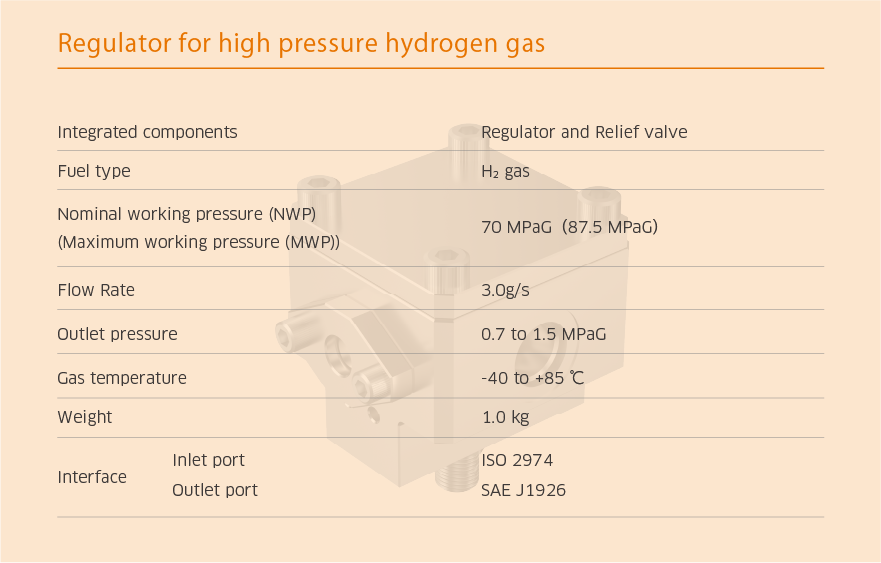
Kawasaki’s high pressure hydrogen gas valves are highly reliable and pass the various automotive durability tests.

Product specifications


Hydrogen engines
Hydrogen engines powering all types of mobility
In order to utilize hydrogen as a power source not only for automobiles but also for all types of mobility―such as motorcycles, ships, and aircraft―highly efficient hydrogen engines tailored to each mobility platform are required. Kawasaki continues development initiatives in anticipation of the coming hydrogen-based society.
Hydrogen engines
Hydrogen engines powering all types of mobility
In order to utilize hydrogen as a power source not only for automobiles but also for all types of mobility―such as motorcycles, ships, and aircraft―highly efficient hydrogen engines tailored to each mobility platform are required. Kawasaki continues development initiatives in anticipation of the coming hydrogen-based society.
Hydrogen engines powering all types of mobility
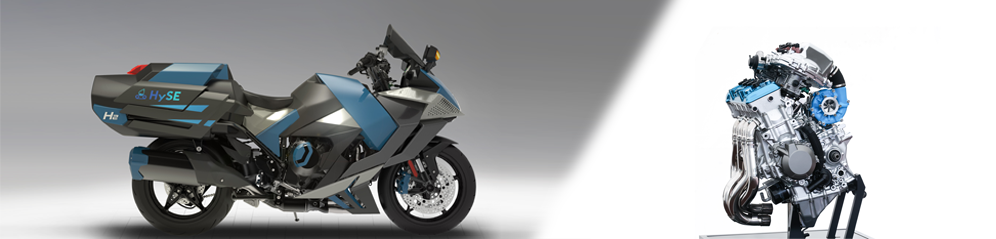
Hydrogen engines can serves as a power source for a wide range of mobility applications, including cars, buses, and trucks, as well as construction machinery, motorcycles, aircraft, and ships. Kawasaki is collaborating with like-minded partners to put hydrogen mobility to practical use.
We collaborate with domestic motorcycle companies to conduct basic research on
hydrogen fueled internal
combustion engines for small mobility vehicles in a technological research
association named HySE (Hydrogen Small mobility & Engine technology).
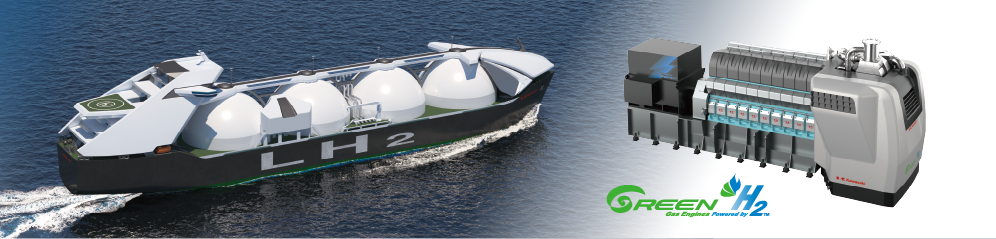
Kawasaki is working on the development of hydrogen engines and hydrogen fuel
supply systems for maritime applications. Our “hydrogen-fired dual fuel 4-stroke
engine” is currently under development, and following demonstration tests it
will be deployed to respond to the growing demand for decarbonization in the
marine transport industry.
In March 2021, HyEng Corporation was established by three of Japan’s leading
marine engine manufacturers, including Kawasaki. Aiming to expand the use of
hydrogen-fueled ships in the future, we are moving forward with joint
development of hydrogen-fueled marine engines and working toward their
commercialization.
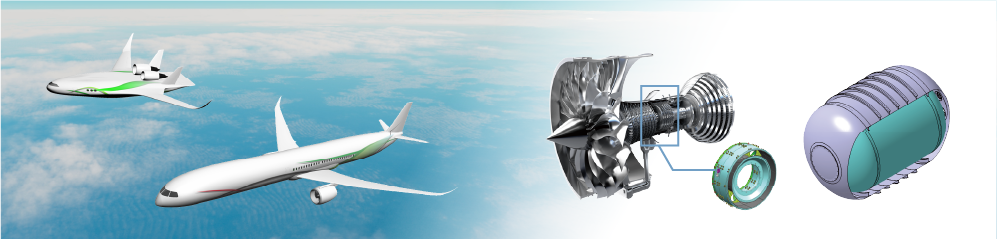
In the aircraft business, we are also working on R&D of engine systems as a core technology for hydrogen-powered aircraft. In addition, we are developing liquefied hydrogen fuel tanks and supply systems, and studying aircraft architectures and aviation concepts to advance the development of next-generation aircraft.
Contact us via the form
for hydrogen-related product inquiries.
