Kawasaki Establishes Automated Production Line for Vacuum-Insulated Double-Wall Piping for Liquefied Hydrogen Plants —First Shipment of Vacuum-Insulated Double-Wall Piping for the Liquefied Hydrogen Supply Chain Commercialization Demonstration Project—
Nov. 11, 2026
Tokyo, November 11, 2026 — Kawasaki Heavy Industries, Ltd. announced that it has established a production line to automate the manufacturing processes for vacuum-insulated double-wall piping for commercial-scale liquefied hydrogen plants at its Harima Works (Harima-cho, Kako-gun, Hyogo Prefecture).
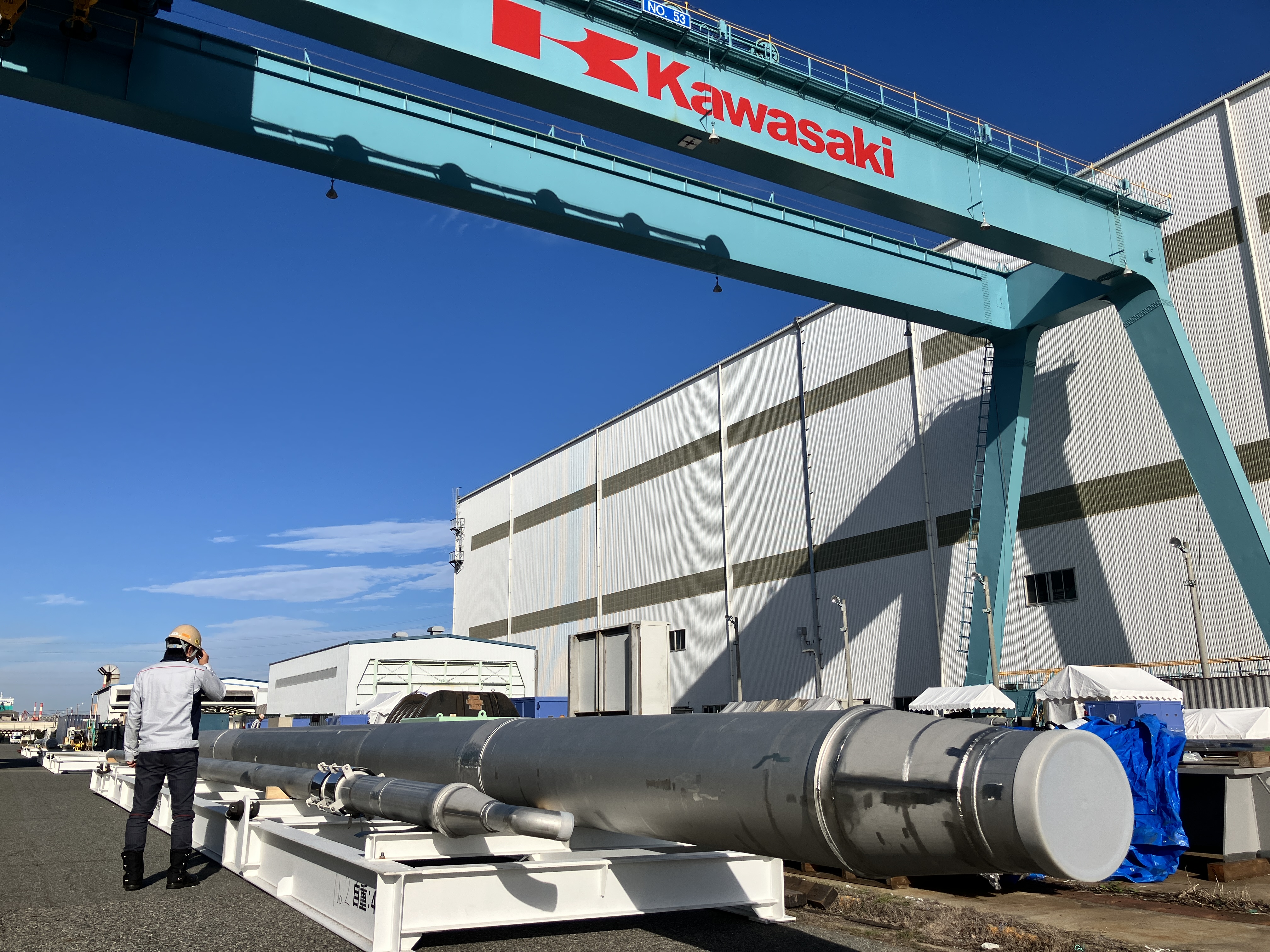
On November 10, Kawasaki made the first shipment of spools completed on the production line to the Kawasaki LH2 Terminal*2, a liquefied hydrogen base under construction in Ogishima, Kawasaki-ku, Kawasaki City, Kanagawa Prefecture, as part of the Liquefied Hydrogen Supply Chain Commercialization Demonstration Project*1 promoted by the New Energy and Industrial Technology Development Organization (NEDO). Spools are piping units prefabricated at a factory in sizes suitable for transportation and installation.
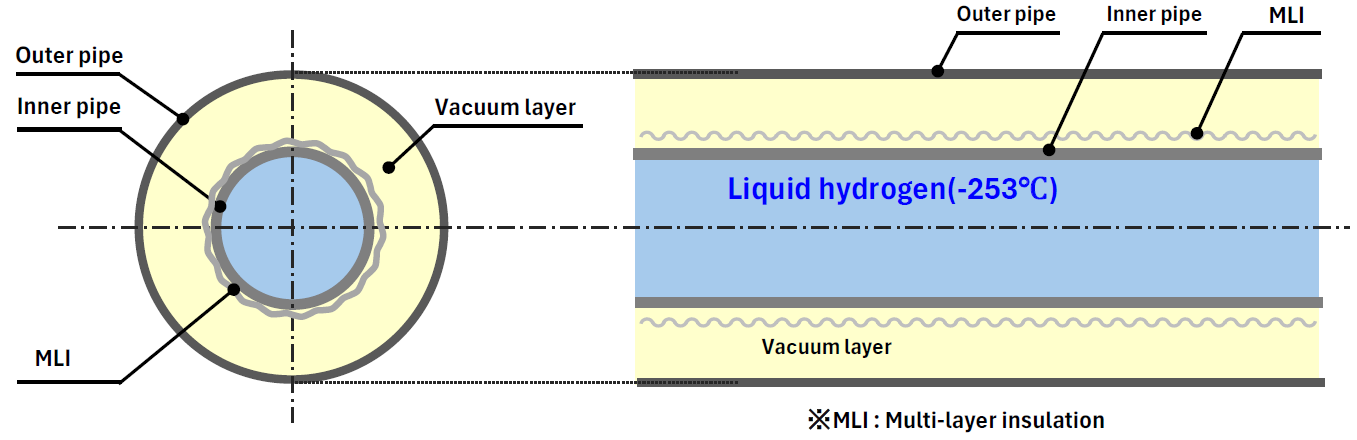
Vacuum-insulated double-wall piping minimizes heat ingress from the outside by maintaining a vacuum between the inner and outer pipes, enabling the efficient and safe transfer of liquefied hydrogen at -253°C. The piping now being produced and shipped is based on the piping manufactured in 2020 for the pilot demonstration at Hy touch Kobe*3. For the commercialization demonstration, the number of spools has increased to approximately 33 times that of the pilot demonstration, while the maximum inner pipe diameter has increased to approximately 2.3 times the previous size. Improving the efficiency of manufacturing processes, including machining, welding, and nondestructive testing, was therefore a key challenge.
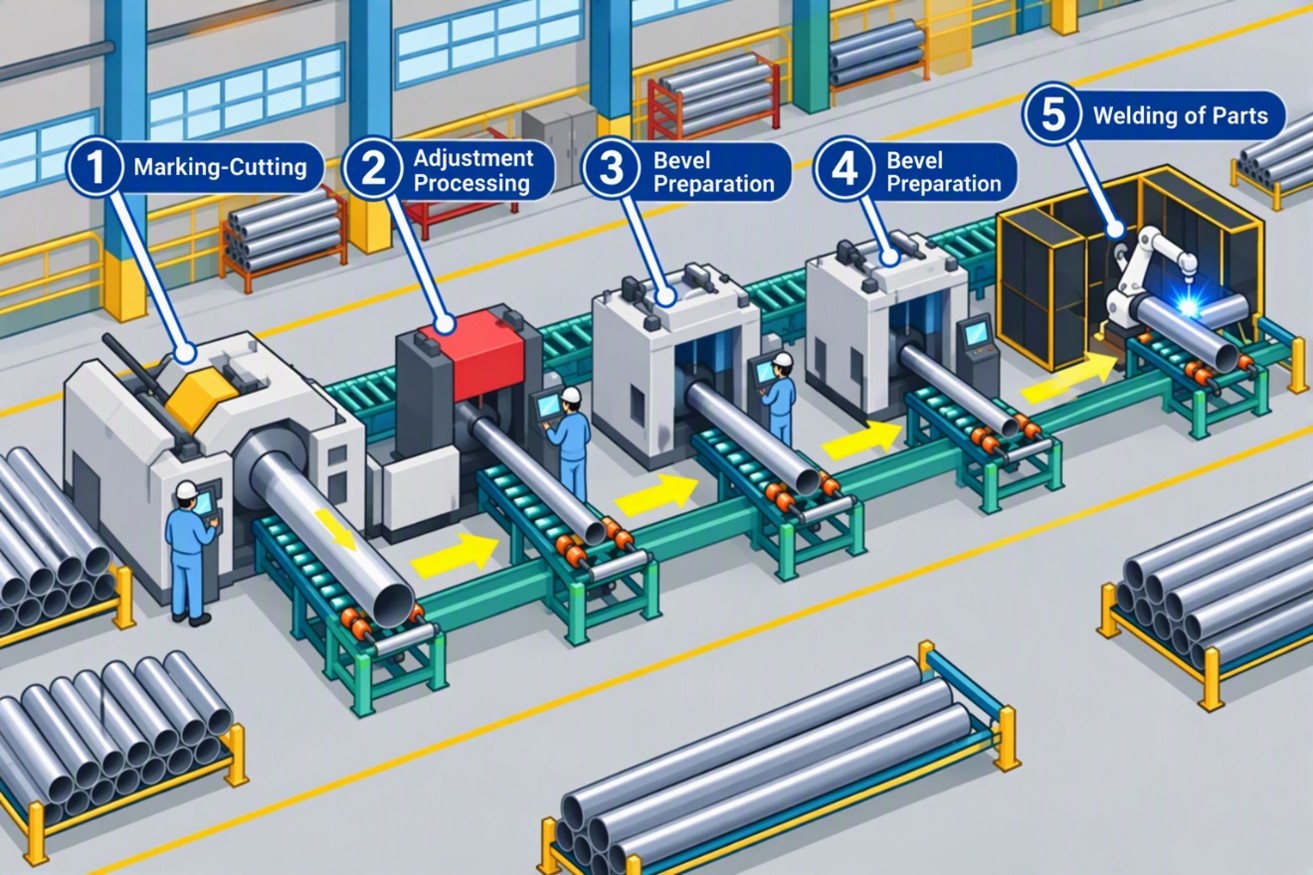
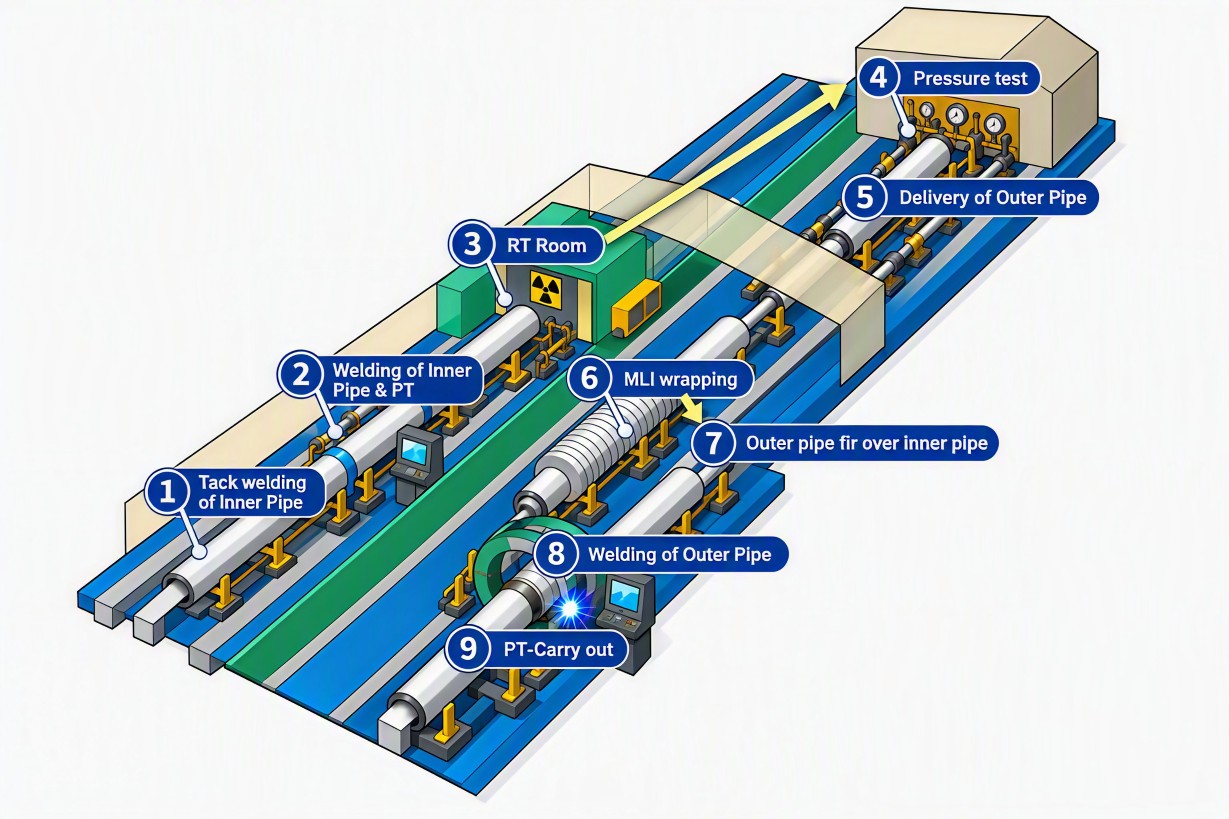
To address this challenge and supply high-quality piping with shorter lead times, Kawasaki established a production line that automates key manufacturing processes using dedicated automated machines and robots developed in-house.
The production line consists of a raw-pipe processing line and a subassembly line. The inner and outer pipes fabricated on these lines are assembled together to complete each spool.
Each spool is custom-made with different pipe diameters, lengths, and shapes, making the management of processing parameters complex. To ensure quality and streamline traceability management, Kawasaki has established a system that automatically identifies the required processing parameters using two-dimensional codes assigned to individual components. A similar system will be used during on-site installation to improve work efficiency. Kawasaki has also established a system for continuous improvement by automatically collecting operating data from each machine and analyzing the accumulated data to identify issues.
| Facility Overview | |
|---|---|
| Investment | Approximately ¥2 billion |
| Location | Harima Works (Harima-cho, Kako-gun, Hyogo Prefecture) |
| Total floor area | Approximately 5,400 m² |
| Automated production line processes: |
|
Kawasaki will continue working with relevant organizations and partners to reduce costs and improve reliability in the production, storage, and transportation of liquefied hydrogen. Through these efforts, Kawasaki will promote the deployment of liquefied hydrogen supply chains, contributing to the realization of a carbon-neutral society and Japan’s energy security.
*1 NEDO Green Innovation Fund Project: Large-scale Hydrogen Supply Chain Establishment
https://green-innovation.nedo.go.jp/en/project/hydrogen-supply-chain/
*2 Groundbreaking Ceremony Held for a Key Facility in the Liquefied Hydrogen Supply Chain Commercialization Demonstration Project
https://global.kawasaki.com/news_251127-2e.pdf
*3 Kawasaki Completes World's First Liquefied Hydrogen Receiving Terminal Kobe LH2 Terminal (Hy touch Kobe)
https://global.kawasaki.com/en/corp/newsroom/news/detail/?f=20201203_2378
Contact
If you need more information about our business,
please feel free to contact us.